Q:What is your definition of Artificial Intelligence?
A:Our definition of AI is that it is various tools and approaches to working with complex and large data through strategies that are at least, in part, inspired by the inner workings of the brain. This is not to say that we see any of current AI being intelligent in the conscious manner in which we and other species of life on this earth are, but rather that they mimic certain functions and strategies that we have observed and been inspired to implement as tools. Biomimicry, if you will.
Q:Based on the first question, how do you then define Artificial Intelligence Art?
A:For us AI Art is a subset of the Generative Arts, that is to say that it is art that uses machine learning and deep learning tools as a means and medium to creating artworks. Just like the generative arts in general, this can involve a larger degree of randomness as well as working with data and subject matter that would be too much for any individual artist to work with “by hand”.
Q:How AI is applied in your works?
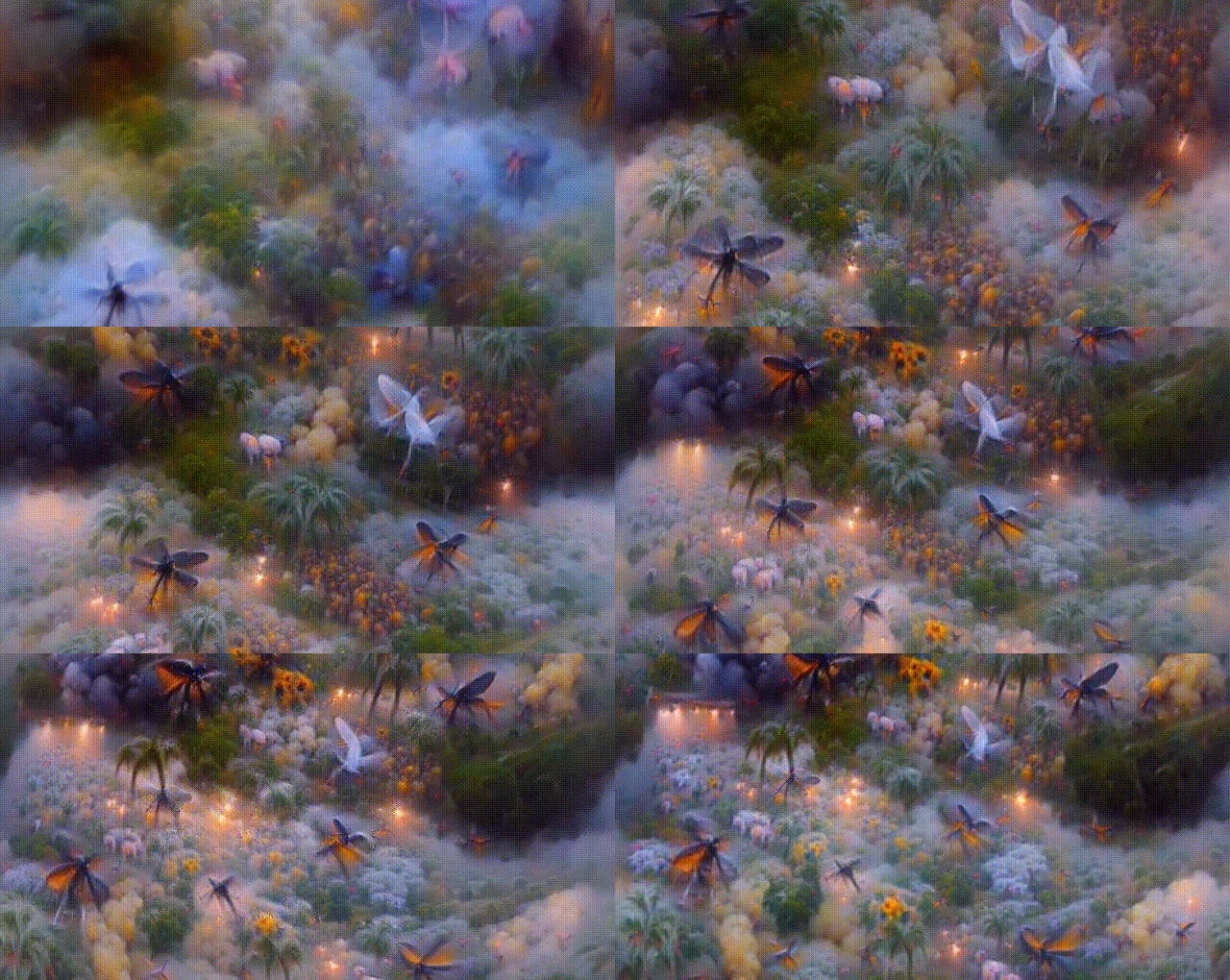
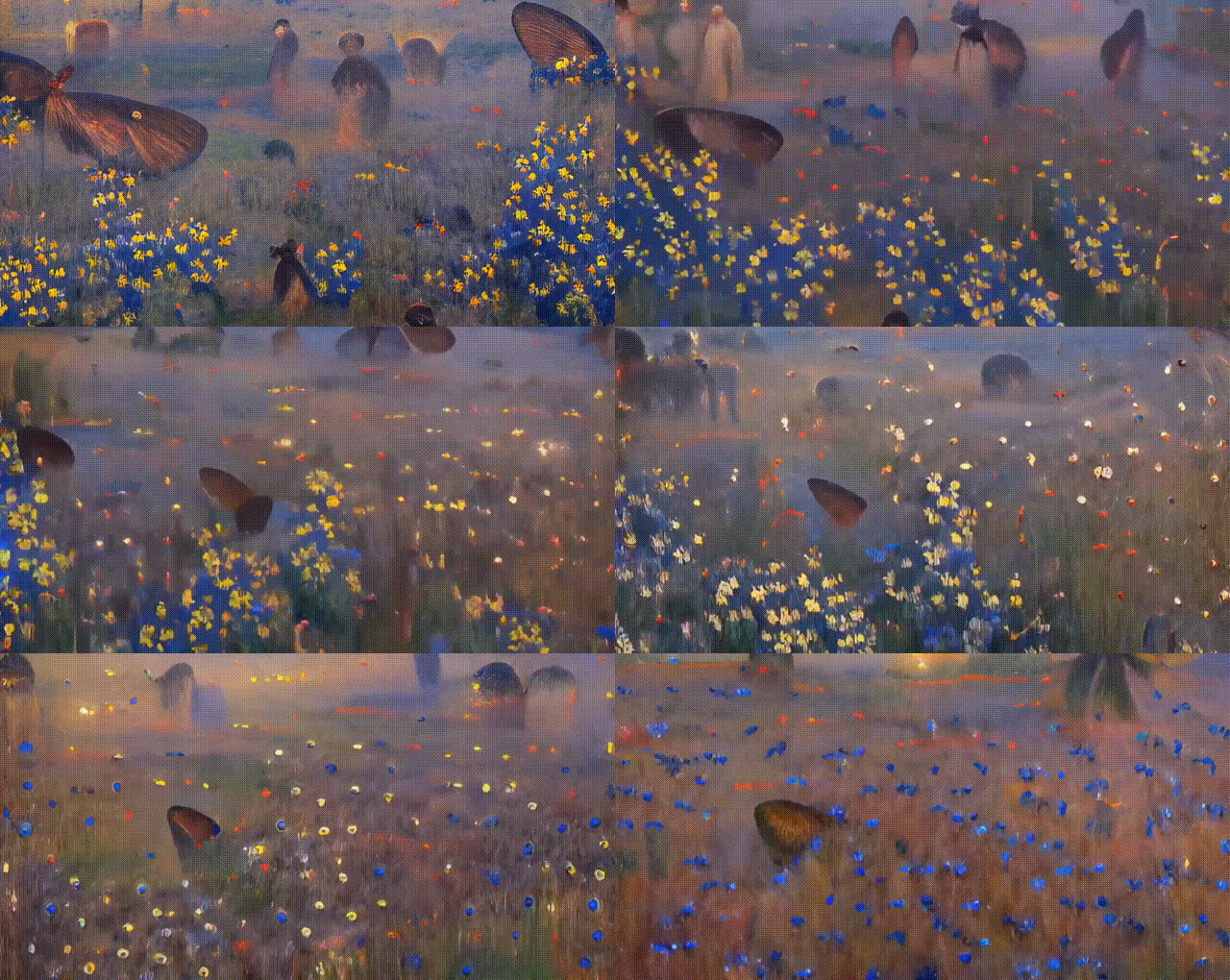
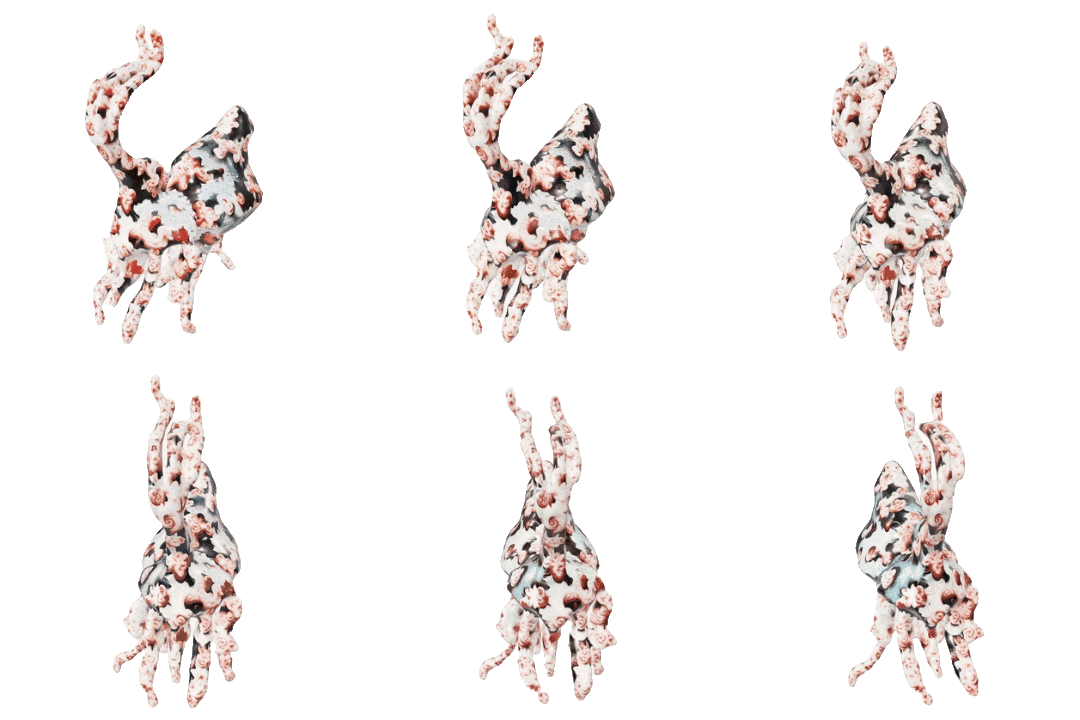
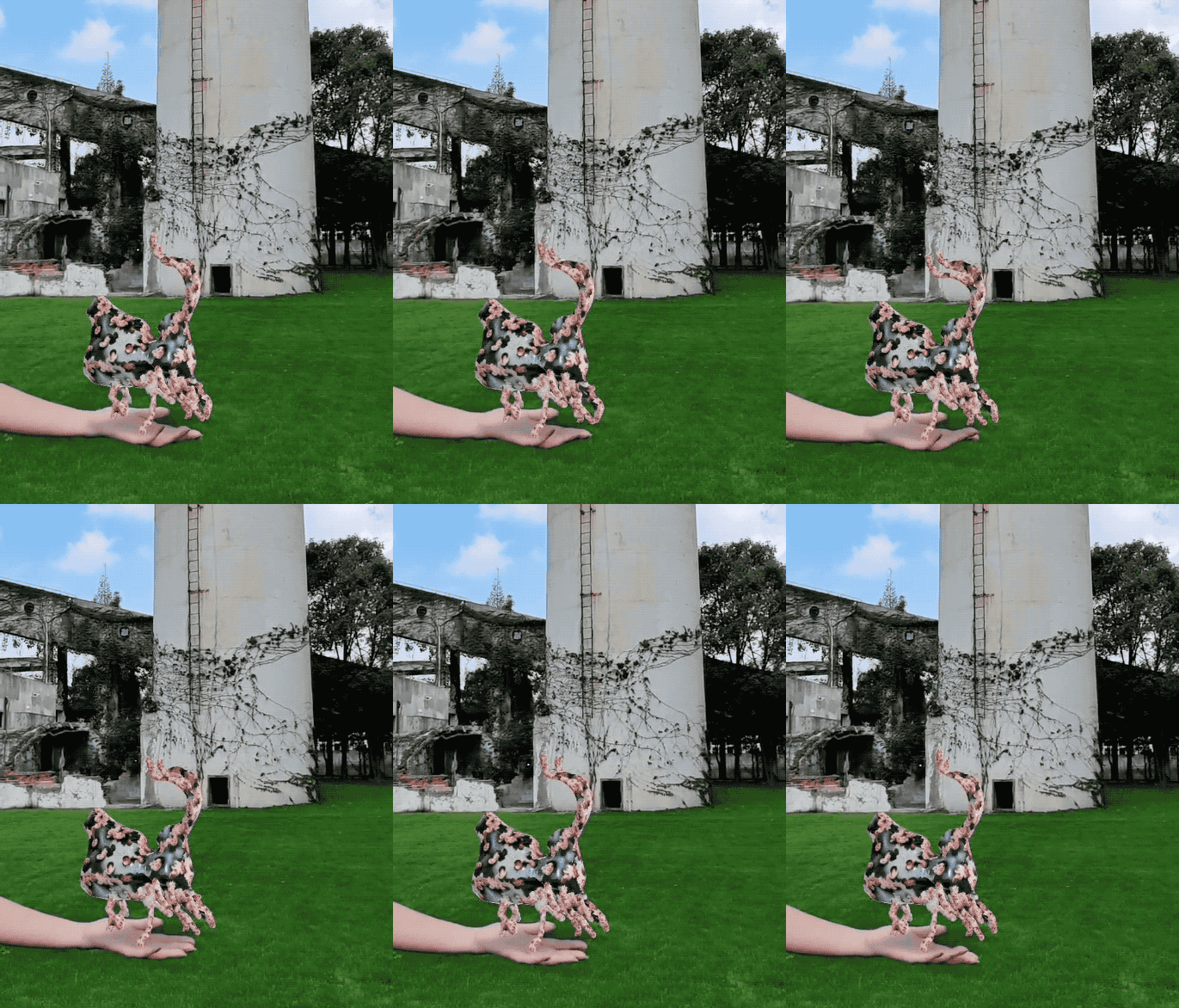
A:The focus of our work is on nature and ecology, as part of our generative practice we use AI as a tool that allows us to explore the natural world and its underlying patterns and essential qualities. What using this specific kind of tool allows us is to work in more intuitive ways as machine learning models allow us to produce and output variations at scales that would be impossible for us a artists working by hand. We then use the conceptual narrative and our intuitive senses to navigate in the resulting outputs from the (neural network) models we’ve trained.
Naturally we are often surprised by what patterns and essential qualities emerge from the AI outputs, but as we grow ever more familiar with these tools it becomes easier to explore more nuanced, detailed creations.
Q:According to your work in this exhibition, what kind of relationship did you form with AI?
A:For us, AI is a creative tool, by this we mean a tool that allows us to work with different capabilities than for instance, a camera or a pencil. We also do not view it as a replacement for any of the traditional mediums that exist, but rather as a new, complementary digital medium that adds nuance and new capabilities to our practice as artists. Furthermore, it very much enables us to work with ecology as a main focus as much of the challenges humanity faces is one of representation, empathy and understanding.
For the exhibition the main focus has been using AI tools as a means of working with the data that exists about the more-than-human (natural) world and at once exploring how much (or little) of the natural world is present in an accessible form and how we can through visualizing the limits of our knowledge still find ways to imagine new, hybrid futures of harmonious co-existence with the more-than-human.
Q:Could you please recommend some movie, fiction or TV shows related to AI?
A:It’s hard to come up with relevant films to AI directly, for us films, books and more that touch upon ecology, ways of seeing and understand the world are our primary inspiration. Some of the works that have inspired us are Jeff Vandermeer’s ‘Southern Reach’ trilogy (and the movie ‘Annihilation that was based upon the first volume of the trilogy),‘Codex Seraphinianus’ by Luigi Serafini, pretty much every nature documentary by David Attenborough, and ‘EntangledLife’ by Merlin Sheldrake.