
- 0
- 0
- 0
分享
- TIME的新封面| 元宇宙将改变一切
-
2022-07-20
文化 · 科技
数字创意 | 文博 | 元宇宙 | 文旅EPC | 运营 | 文化产业
文章作者:Matthew Ball & TIME
文章编译:宽创国际

美国证券交易委员会报告称,在 2022 年的前6个月,Metaverse 这个词在监管文件中出现了 1100 多次,而前一年仅有 260 次提及。前二十年总共不到十几个。越来越感觉好像每个企业经营者都觉得有必要将元宇宙与他们公司的能力业务更好地结合起来,并且比竞争对手公司做的好。很少有人解释它是什么或他们将构建什么。经营者层面似乎也不同意这个新平台的基本方面,包括虚拟现实设备、区块链和加密技术的重要性,以及它现在是否存在、可能很快出现或未来几十年后再出现。
这些都没有投资的限制。关于Facebook更名为“Meta”,以及它每年因元宇宙计划而损失的100多亿美元,已经有很多报道了。但世界上另外六家最大的上市公司——亚马逊、苹果、谷歌、微软、英伟达、腾讯——也在忙着为元宇宙做准备。他们正在进行内部重组,重新编辑职位描述,重新设计产品,并准备推出价值数十亿美元的产品。今年1月,微软宣布了大型科技公司历史上最大的一笔收购,斥资750亿美元收购了游戏巨头动视暴雪,后者将 “ 为元宇宙提供构建组件 ”。据McKinsey & Company估计,今年前5个月,企业、私募股权公司和风险投资家总共进行了 1200 亿美元的元宇宙相关投资。
Nearly all of the aforementioned work has, thus far, remained invisible to the average person. Rather like the metaverse itself. There isn’t really a metaverse product we can go buy, nor “metaverse revenue” be found on an income statement. In fact, it might seem as though the metaverse, to the extent it ever existed, has already come and gone. Crypto has crashed. So too has Facebook’s market capitalization, which topped $900 billion when the company changed its name to Meta, but now sits around $445 billion. This year, the video gaming sales have fallen by nearly 10%, due in part to the end of the pandemic that forced many people inside
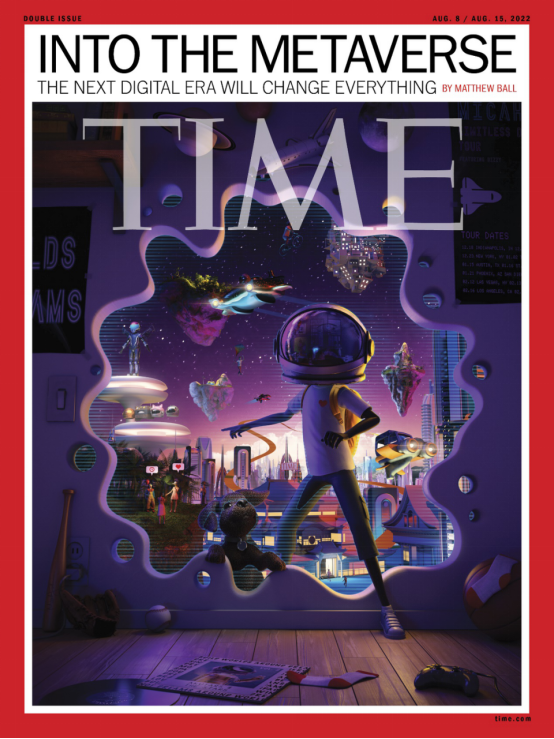
Figure 1 Illustration by Micah Johnson for TIME
元宇宙似乎正在爆发,对于许多人来说,这是一件好事。最大的科技平台已经对我们的生活,以及现代经济的技术和商业模式产生了巨大的影响。很明显,今天的互联网有很多问题;为什么不在进入马克·扎克伯格所说的“继任者”之前解决这些问题呢?
To many, it’s a good thing that the metaverse seems to be sputtering. The largest tech platforms have already established enormous influence over our lives, as well as the technologies and business models of the modern economy. It’s also clear that there are many problems with today’s internet; why not solve them before moving onto what Mark Zuckerberg calls “the successor” to it?
答案就在这个问题中。元宇宙是一个近30年的术语,但这个将近一个世纪前的想法,正在我们周围形成。每隔几十年,平台的转变就会发生——比如从大型机到个人电脑和互联网,或者随后的演变到移动和云计算。一个新时代一旦形成,要改变他和如何去领导它是极其困难的。但在不同时代之间,这些事情通常会发生变化。如果我们希望建设一个更美好的未来,那么我们必须像那些投资建设未来的人一样积极地建设它。
The answer is embedded in that very question. The metaverse, a 30-year-old term but nearly century-old idea, is forming around us. Every few decades, a platform shift occurs—such as that from mainframes to PCs and the internet, or the subsequent evolution to mobile and cloud computing. Once a new era has taken shape, it’s incredibly difficult to alter who leads it and how. But between eras, those very things usually do change. If we hope to build a better future, then we must be as aggressive about shaping it as are those who are investing to build it.
那么元宇宙的未来是什么?把元宇宙想象成一个平行的虚拟存在层,它跨越了所有的数字技术,甚至会控制物质世界的大部分。这种结构有助于解释元宇宙作为3D互联网的另一种常见描述,以及为什么建立它如此困难,但也可能是值得做的。
So what is this future? Think of the metaverse as a parallel virtual plane of existence that spans all digital technologies and will even come to control much of the physical world. This construct helps explain another common description of the metaverse as a 3D internet—and why establishing it is so hard, but also likely to be worthwhile.
我们今天所知道的互联网几乎覆盖了每个国家,拥有4万个网络,100万个应用程序,超过1亿个服务器,近20亿个网站,以及数百亿台设备。每一种技术都可以连贯一致地交换信息,“在网上”找到彼此,共享在线帐户系统和文件(一个JPEG文件、一个MP4文件、一段文本),甚至相互连接(想想新闻发布者如何链接到另一家媒体的报告)。近20%的世界经济被认为是“数字化”的,剩余的80%都在互联网上运行。
The internet as we know it today spans nearly every country, 40,000 networks, millions of applications, over a hundred million servers, almost 2 billion websites, and tens of billions of devices. Each of these technologies can coherently, consistently exchange information, find one another “on the net,” share online account systems and files (a JPEG, an MP4, a paragraph of text), and even interconnect (think of how a news publisher links to another outlet’s report). Nearly 20% of the world economy is considered “digital,” with much of the remaining 80% running on it.
尽管互联网具有扩展性强、用途广泛和强大的功能属性特点,但它并不是为涉及多并发的实时互动体验而建立的——尤其是在3d成像方面。相反,互联网的设计主要是为了一个静态文件(如电子邮件或电子表格)可以被复制并从一个设备发送到另一个设备,这样它就可以被独立地、异步地审查或修改。这也是为什么即使在“流媒体战争”(Streaming Wars)和市值数万亿美元的大型科技公司盛行的时代,简单的两人视频通话也会如此不可靠的部分原因。(在线多人游戏居然还能运行,真是个奇迹。)此外,关于3D信息的文件格式或约定也没有达成共识,在虚拟世界中也没有交换数据的标准系统。我们也缺乏像我们想象的那样实现元宇宙的计算能力。我们希望有很多新设备能实现这一点,不仅仅是VR眼镜,还有全息显示器、超声波力场发生器,以及听起来有点诡异的捕捉肌肉电信号的设备。
Though the Internet is resilient, wide-ranging, and powerful, it wasn’t built for live and interactive experiences involving a large number of participants—especially when it comes to 3-D imaging. Rather, the internet was designed primarily so that one static file (such as an email or spreadsheet) could be copied and sent from one device to another, such that it might be independently and asynchronously reviewed or modified. This is partly why, even in the age of the “Streaming Wars” and multi-trillion dollar big tech companies, simple two-person video calls can be so unreliable. (It’s a marvel that online multiplayer games work at all.) Furthermore, there’s no consensus on file formats or conventions for 3D information, no standard systems to exchange data in virtual worlds. We also lack the computing power to pull off the metaverse as we imagine it. And we will want many new devices to realize it—not just VR goggles, but things like holographic displays, ultra-sonic force-field generators, and, spooky as it sounds, devices to capture electrical signals sent across muscles.
我们无法事先确切知道3D互联网对全球经济的重要性,就像我们不知道互联网的价值一样。但我们确实对答案有一些看法。随着互联网连接和计算机处理器的改进,我们已经从无色的文本转向原始的网页和网络博客,然后是在线档案(如Facebook)和基于视频的社交网络,表情符号和滤镜。我们在网上产生的内容数量已经从每周几篇留言板上的帖子、电子邮件或博客更新,增长到不断压缩我们生活的多媒体内容流。下一个演变可能是一个持久的、“活生生的”虚拟世界,它不是我们生活的窗口(如Instagram),也不是我们交流的地方(如Gmail),而是一个我们也存在的世界——而且是3D的世界(因此人们会关注沉浸式VR头戴设备和虚拟形象)。
We cannot know in advance exactly how important a 3D internet might be to our global economy, just as we didn’t know the value of the internet. But we do have some view to the answer. As internet connectivity and computer processors have improved, we’ve shifted from colorless text to primitive webpages and web blogs, then online profiles (like a Facebook page) and video-based social networks, emojis, and filters. The volume of content we produce online has grown from a few message board posts, emails, or blog updates a week to a constant stream of multimedia content encapsulating our lives. The next evolution to this trend seems likely to be a persistent and “living” virtual world that is not a window into our life (such as Instagram) nor a place where we communicate it (such as Gmail) but one in which we also exist—and in 3D (hence the focus on immersive VR headsets and avatars).
目前,每天有近1亿人登录《Roblox》、《我的世界》和《堡垒之夜创意》等平台,这些平台运营着数千万个相互连接的世界,支持一致的虚拟身份、虚拟商品和通信套件,可以从大多数设备访问。在这些平台上的大部分时间都花在休闲上——玩游戏、听音乐会——但我们开始发现这些方式已经开始满足不了客户,因为他们在寻找其他的放松方式。
Already, nearly a hundred million people a day log onto Roblox, Minecraft, and Fortnite Creative, platforms that operate tens of millions of interconnected worlds, which support a consistent virtual identity, virtual goods, communications suites, and can be accessed from most devices. Most time in these platforms is spent on leisure—playing games, attending concerts—but we are starting to see people go further.
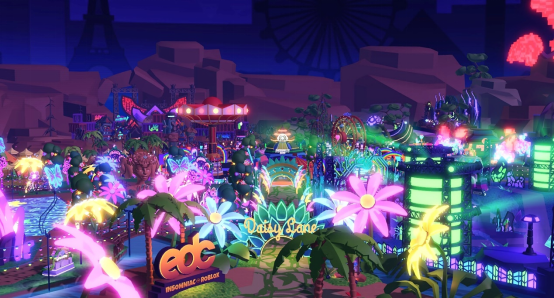
Figure 2 The Electric Daisy Carnival was the first music festival in Roblox held over several days in October 2021.
教育是我们长期以来一直期待数字时代改变的一个类别,但迄今为止我们一直在抵制它。自1983年以来,高等教育的成本增长了1200%以上;同期美国医疗保健和服务费用增幅排名第二,增幅只有美国的一半。真正的挑战是,真正的东西需要更多的资源(相较于十年前),当我们沉浸在电脑屏幕前,丢失了眼神接触、同伴、动手实验、各类设备。Zoomschool、YouTube和数字多项选择都不能代替真实的东西。
Education is a category we have long expected to be transformed by the digital era, but has thus far resisted it. Since 1983, the cost of higher education has grown over 1,200%; medical care and services, which ranks second for cost increases in the U.S. over that period, is up half as much. The challenge is the real thing requires no fewer resources than it did decades ago, and what is lost when shifting to a remote computer screen. Eye contact. Peers. Hands-on experimentation. Equipment. Zoomschool, YouTube videos, and digital multiple choice are no substitute for the real thing.
在元宇宙中,魔法巴士将会成为可能。几十年来,学生们是通过观看他们的老师同时让羽毛和锤子自由落体,然后观看阿波罗15号指挥官大卫·斯科特在月球上做同样的事情的录像带来学习重力的。(剧透:它们以相同的速度下落。)这样的演示需求是一定存在的,但可以通过创造复杂的虚拟鲁布·戈德堡机器来补充,然后学生们可以在类似地球的重力下,在火星上,甚至在金星大气的硫雨下进行测试。我们不需要解剖青蛙,而是可以像在《马里奥赛车》中驾驶蘑菇王国那样穿梭于它的循环系统中。所有这些都是可行的,不受地理位置或当地学校资源的影响。
In the metaverse, the Magic School Bus becomes possible. For decades, students learned about gravity by watching their teacher drop a feather and a hammer, and then seeing a tape of Apollo 15 commander David Scott doing the same on the moon. (Spoiler: They fall at the same speed.) Such demonstrations need not go away, but they can be supplemented by the creation of elaborate virtual Rube Goldberg machines, which students can then test under Earth-like gravity, on Mars, and even under sulfuric rainfalls of the Venusian upper atmospheres. Instead of dissecting a frog, we can travel its circulatory systems not unlike the way we drive the Mushroom Kingdom in Mario Kart. And all of this is available irrespective of geographic location or resources of the local school board.
2021年,约翰·霍普金斯大学的神经外科医生使用增强现实头盔进行了医院史上首次活体病人手术,从而为外科医生提供了病人内部解剖的交互式显示。实施手术的蒂莫西·威瑟姆(Timothy Witham)医生将其比作拥有GPS,这个参照系很重要,他同时也是该医院脊柱融合实验室的负责人,我们经常认为元宇宙会取代我们今天所做的事情——比如戴上VR头戴设备而不是使用智能手机或看电视——但我们不会用GPS去替代汽车,而我们开车的同时会使用GPS。
In 2021, neurosurgeons at Johns Hopkins performed the hospital’s first-ever live patient surgery using an augmented-reality headset, thereby providing the surgeon with an interactive display of the patient’s internal anatomy. Dr. Timothy Witham, who performed the surgery and also directs the hospital’s Spinal Fusion Laboratory, likened it to having GPS. This frame of reference is important. We often think of the metaverse replacing something we do today—such as wearing a VR headset instead of using a smartphone or watching TV—but we don’t drive GPS instead of a car; we drive a car with GPS.
2021年早些时候,谷歌发布了其“星际计划”(Project Starline)设备,该设备使用机器学习、计算机视觉、十几个深度传感器和摄像头以及基于织物的多层光场显示器,无需使用VR眼镜就能创建3D“全息视频”。谷歌表示,与传统的“2D”视频通话相比,其Starline技术使眼神交流增加了15%,非语言交流(手势、点头、眉毛动作)增加了25-50%,对对话的记忆力提高了30%。我们当中很少有人喜欢Zoom;也许我们的一些不满可以通过全新的一个维度的来缓解。
Earlier in 2021, Google unveiled its Project Starline device, which uses machine learning, computer vision, a dozen depth sensors and cameras and fabric-based multi-layered light field displays to create 3D “holographic video” without requiring the use of mixed reality goggles. In comparison to traditional “2D” video calling, Google says its Starline technology leads to 15% increases in eye-contact, 25-50% increases in non-verbal forms of communication (hand gestures, head nods, eyebrow movements) and 30% better memory recall of the conversation. Few of us enjoy Zoom; perhaps some of our displeasure can be alleviated by adding another dimension.
基础设施是很好的例子。香港国际机场现在运行一个实时的“数字孪生”, 允许机场运营商使用实时的3D模拟来确定乘客和飞机应该被引导到哪里。耗资数十亿美元、历时数十年的城市项目正在使用这些技术来确定某栋建筑可能会如何影响交通流量和应急响应时间,或者它的设计将如何影响某一天当地公园的温度和阳光,这些大多是不连贯的模拟。下一步是让它们在线上——就像从离线的微软Word文档转移到基于云的、协作的文档——把世界变成一个数字开发平台。
Infrastructure is another good example. The Hong Kong International Airport now operates a live “digital twin” of the facility, allowing airport operators to use a live 3D simulation to determine where passengers and planes should be directed. Multi-billion-dollar, multi-decade city projects are using these technologies to determine how a given building might affect traffic flows and emergency response times, or how its design will affect the temperature and sunlight of a local park on a specific day. These are mostly disconnected simulations. The next step is to bring them online—like shifting from offline Microsoft Word documents to cloud-based, collaborative ones—and turning the world into a digital development platform.
然而,对于社会来说,元宇宙到底意味着什么还不清楚。这让一些人产生了可以理解的犹豫,他们看到数十亿美元被投入到一款游戏中。但是,可以把元宇宙看作继计算和网络之后的大型机的第四个时代,从20世纪50年代到70年代;1980年代至2000年代中期的个人电脑及互联网;以及我们今天所经历的移动和云时代。每个时代都改变了访问计算和网络资源的人、时间、地点、原因和方式。这些变化的结果是非常深远的。但它们也很难去具体预测。
For society, however, exactly what the metaverse means is unclear. This gives understandable pause to some, who see billions invested in what feels like a game. But think of the metaverse as a fourth era of computing and networking—succeeding mainframes, which ran from the 1950s to 1970s; personal computers and the Internet of the 1980s to mid-2000s; and the mobile and cloud era we experience today. Each era changed who accessed computing and networking resources, when, where, why, and how. The results of these changes were profound. But they were also hard to specifically predict.
即使是移动互联网最坚定的信徒,也曾难以预判“更多的人、更多的上网次数、为了更多的原因”之外的事情。对数字网络有详细的技术理解并不能照亮未来,在研发方面投入数十亿美元也不能。Facebook、Netflix或AWS云计算平台等服务在事后看来是显而易见的,但它们的商业模式、技术和设计原则都不太清楚。在这方面,我们应该认识到混乱、合并和不确定性是破坏的先决条件。
Even the biggest believers in the mobile internet once struggled to predict more than “more people, online more often, for more reasons.” Having a detailed technical understanding of digital networking didn’t illuminate the future, nor did deploying billions in R&D. Services such as Facebook, Netflix, or Amazon’s AWS cloud computing platform are obvious in hindsight, but nothing about them—their business models, technology, design principles—was at the time. In this regard, we should recognize that confusion, conflation, and uncertainty are prerequisites for disruption.
不过,仍有一些具体问题可以解决。元宇宙经常被错误地描述为沉浸式VR头盔,如Oculus VR或VR眼镜,迄今为止最著名的例子是谷歌的臭名昭著的眼镜。VR和AR设备可能成为访问元宇宙的首选方式,但它们不是元宇宙。考虑到智能手机与移动互联网不同。元宇宙也不是《Roblox》、《我的世界》、《堡垒之夜》或其他任何游戏;这些虚拟世界或平台很可能成为元世界的一部分,就像Facebook和谷歌是互联网的一部分一样。出于类似的原因,把元宇宙看作是单数,就像我们说“互联网”而不是“一个互联网”一样。(我们今天能识别不同互联网的情况在很大程度上反映了互联网的地区监管差异。)元宇宙和Web3.0、加密和区块链之间的结合是非常常见的。这三者可能成为实现元宇宙潜力的重要组成部分,但它们仅仅是规则和技术。事实上,许多元宇宙的领导者对加密技术的未来持怀疑态度。
Still, there are specific issues that can be cleared up. The metaverse is often misdescribed as immersive virtual reality headsets, such as the Meta Quest (née Oculus VR), or augmented reality glasses, the most famous example of which to date is Google’s infamous Glass. VR and AR devices may become a preferred way to access the metaverse, but they are not it. Consider that smartphones are not the same thing as the mobile internet.The metaverse is also not Roblox, Minecraft, Fortnite, or any other game; these are virtual worlds or platforms that are likely to be part of the metaverse, just as Facebook and Google are part of the internet. For similar reasons, think of the metaverse as singular, just as we say “the internet” not “an internet.” (To the extent we identify different internets today, this largely reflects regional regulatory differences.) Another frequent conflation is that between the metaverse and Web3, crypto, and blockchains. This trio may become an important part of realizing the metaverse’s potential, but they are merely principles and technologies. In fact, many metaverse leaders doubt there is any future for crypto.
元宇宙不是对互联网的彻底改革,也不能被认为是将取代 所有手机型号、设备或软件的东西。它将产生新的技术和新的行为。但这并不意味着我们要抛弃我们喜欢的东西。我仍然在PC上写作,这可能仍然是写长篇文本的最佳方式。如今,大多数互联网流量都是在移动设备上产生和终结的,但几乎所有的流量都是在固定线路电缆上传输的,并使用20世纪80年代设计的互联网协议套件。
The metaverse should not be thought of as an overhaul to the Internet, nor something that will replace all mobile models, devices, or software. It will produce new technologies, and behaviors. But that doesn’t mean we leave what we prefer behind. I still write on a PC, and that’s likely to remain the best way to write long-form text. The majority of internet traffic today both originates and terminates on a mobile device, yet nearly all of it is transmitted on fixed-line cables and using the Internet Protocol Suite as it was designed in the 1980s.
元宇宙还没有到来(即使一些经营者会声称它已经到来,或者至少即将到来)。与此同时,传统互联网与元宇宙的之间的转换不会经历“颠覆”。我们今天处于移动时代,但第一次蜂窝网络呼叫是在1973年,第一次无线数据网络是在1991年,智能手机是在1992年,以此类推,直到2007年iPhone出现。虽然很难说元宇宙的发展是何时开始的,但它在清晰地发展进行中。2021年中期,就在Facebook公布其元宇宙计划的几周前,《堡垒之夜》开发商Epic Games的首席执行官兼创始人Tim Sweeney在推特上发布了该公司1998年游戏《虚幻》的预发布代码,并补充说玩家“可以进入门户,在(不同的世界)之间旅行……没有战斗,可站在一个圈内聊天。”这些体验在当时没有得到普及,原因有很多——上网的人太少,创造世界的工具太难使用,支持它们的设备太贵太笨重,等等。“我们对有元宇宙世界的愿望已经很久很久了……”几分钟后他补充道,“但只是在最近几年,大量关键的工作部件开始迅速聚集”
The metaverse is not yet here (even if some executives will claim it is, or at least imminent). At the same time, transformations don’t experience “switch flips.” We are in the mobile era today, but the first cellular network call was in 1973, the first wireless data network was in 1991, smartphone in 1992, and so on until the iPhone in 2007. While it’s impossible to say when the development of the metaverse began, it’s clearly underway. In mid 2021, only weeks before Facebook unveiled its metaverse intentions, Tim Sweeney, CEO and founder of Fortnite maker Epic Games, tweeted prerelease code from the company’s 1998 game Unreal, adding that players “could go into portals and travel among [different worlds]…with no combat and [would stand] in a circle chatting.” These experiences didn’t take off at the time for a number of reasons—there were too few people online, tools for world-creation were too difficult to use, the devices that could support them were too costly and heavy, etc. “We’ve had metaverse aspirations for a very, very long time…” he added a few minutes later, “but only in recent years have a critical mass of working pieces started coming together rapidly.”
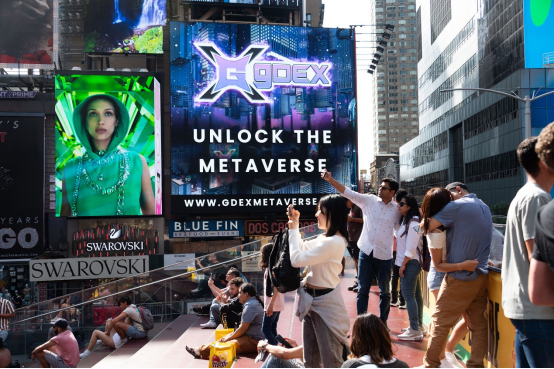
Figure 3 A billboard reads "unlock the metaverse" in Times Square during the 4th annual NFT.NYC conference on June 20, 2022 in New York City.
元宇宙本身也不是反乌托邦的。这是一个常见的误解,因为“元宇宙”这个词来自于尼尔·斯蒂芬森的反乌托邦小说《雪崩》。《雪崩》的前辈,如威廉·吉布森的《神经漫游者》(1984)和菲利普·k·迪克的《泡沫的麻烦》(1953),同样给读者留下一种元宇宙恶化了现实世界的感觉。戏剧是大多数小说的根源;乌托邦很少是流行故事的背景。但自1970年以来,出现了大量的“原始元宇宙”,它们的中心不是征服或牟取暴利,而是合作和创造。每过十年,这些世界的现实性就会得到提高,其功能、价值和文化影响也会随之增强。
The metaverse is also not inherently dystopic. This a common misconception as the word “Metaverse” comes from a dystopic novel, Neal Stephenson’s Snow Crash. Snow Crash’s forebears, such as William Gibson’s Neuromancer (1984) and Philip K. Dick’s The Trouble With Bubbles (1953), similarly leave readers with the sense that the metaverse worsened the real world. Drama is at the root of most fiction; utopias are rarely the setting for popular stories. But since the 1970s, numerous “proto-metaverses” have emerged that have not been centered on subjugation or profiteering, but on collaboration and creativity. Each decade, the realism of these worlds improves, as does their functionality, value, and cultural impact.
今天的互联网的基础是几十年来通过政府研究实验室、大学、独立技术人员和机构的工作建立起来的。这些非营利组织通常专注于建立开放标准,以帮助他们从一个服务器到另一个服务器共享信息,这样做可以更容易地在未来的技术、项目和想法上进行合作。这种方法的好处是多方面的。任何人都可以通过任何设备、任何网络,以低成本或零成本的方式访问或构建互联网。
The foundation of today’s internet was built over several decades through the work of government research labs, universities, and independent technologists and institutions. These mostly not-for-profit collectives typically focused on establishing open standards that would help them share information from one server to another, and in doing so make it easier to collaborate on future technologies, projects, and ideas. The benefits of this approach were far-ranging. Anyone could access or build on the internet, from any device, on any network, at low to no cost.
所有的这些都没有能够阻止企业在互联网上获利或通过付费墙建立封闭的体验或专有技术。相反,互联网的“开放性”使更多的公司得以被建立,接触到更多的用户,获得更大的利润,同时也阻止了前互联网巨头(尤其是电信公司)去控制它。开放也是互联网被认为是非常民主的原因,也是当今世界上大多数最有价值的上市公司都是在互联网时代创立(或重生)的原因。
None of this prevented businesses from making a profit on the internet or building closed experiences through paywalls or proprietary tech. Rather, the “openness” of the internet enabled more companies to be built, reaching more users, and achieving greater profits, while also preventing pre-internet giants (and, crucially, telecom companies) from controlling it. Openness is also why the internet is considered to have democratized information, and why the majority of the most valuable public companies in the world today were founded (or were reborn) in the internet era.
不难想象,如果互联网是由跨国媒体集团为了销售小工具、提供广告服务或获取用户数据来获利而创建的,互联网将会有多么不同。
It’s not difficult to imagine how different the internet would be if it had been created by multinational media conglomerates in order to sell widgets, serve ads or harvest user data for profits.
然而,“企业互联网”是当前对元宇宙的期望。当互联网诞生时,政府实验室和大学实际上是唯一拥有计算人才和资源的机构,并有雄心去建立“网络中的网络”,而营利部门很少有人能想象到它的商业潜力。当涉及到元宇宙时,这些都不是真的。相反,它是由私营企业开创和建立的。
However, a “corporate internet” is the current expectation for the metaverse. When the internet was born, government labs and universities were effectively the only institutions with the computational talent, resources, and ambitions to build a “network of networks,” and few in the for-profit sector imagined its commercial potential. None of this is true when it comes to the metaverse. Instead, it is being pioneered and built by private businesses.
在2016年,早在世界各地的公司经营者认真考虑元宇宙之前,Epic Games的Sweeney就告诉VentureBeat:“如果一家中央公司获得了(元宇宙)的控制权,他们将变得比任何政府都更强大,成为地球上的神。”我们很容易发现这样的说法很夸张。但根据Citi和KPMG的数据,到2030年,元宇宙每年的收入可能高达13万亿美元。Morgan Stanley估计美国和中国都有8万亿美元,与Goldman Sachs全球2.5 - 12.5万亿美元的预测相近;麦肯锡预计全球将达到5万亿美元。Nvidia的创始人兼首席执行官Jensen Huang认为,元宇宙的GDP最终将超过“物理世界”。而Nvidia在今年的大部分时间里都被列为全球十大上市公司之一。
In 2016, long before the metaverse was seriously contemplated by the corporate executives worldwide, Epic Games’ Sweeney told VentureBeat that “If one central company gains control of [the metaverse], they will become more powerful than any government and be a god on Earth.” It’s easy to find such a claim hyperbolic. But according to Citi and KPMG, the metaverse could generate as much as $13 trillion in revenue per year by 2030. Morgan Stanley has estimated $8 trillion in both the U.S. and China, similar to Goldman Sachs global projection of between $2.5 and $12.5 trillion; McKinsey forecasts $5 trillion worldwide. Jensen Huang, the founder and CEO of Nvidia, which ranked as one of the ten largest public companies in the world for most of the year, believes the GDP of the metaverse will eventually exceed that of “the physical world.”
正是在这一点上,对反乌托邦的恐惧似乎是合理的,而不是危言耸听。元宇宙的概念意味着我们越来越多的生活、劳动、休闲、时间、财富、幸福和人际关系将在虚拟世界中度过,而不仅仅是通过数字设备来辅助。它将是以一个平行世界的形式存在,位于我们的数字经济和实体经济之上,并将两者合二为一。其结果是,控制这些虚拟世界及其虚拟元素的公司将比那些在当今数字经济中处于领先地位的公司更具主导地位。
It is here that fears of a dystopia seem fair, rather than alarmist. The idea of the metaverse means an ever-growing share of our lives, labor, leisure, time, wealth, happiness, and relationships will be spent inside virtual worlds, rather than just aided through digital devices. It will be a parallel plane of existence that sits atop our digital and physical economies, and unites both. As a result, the companies that control these virtual worlds and their virtual atoms will be more dominant than those who lead in today’s digital economy.
元宇宙将使当今因数字化而存在的许多难题变得更加尖锐,如数据版权、数据安全、错误信息和激进化、平台权限和用户幸福度。因此,引领元宇宙时代公司的哲学、文化和优先级将有助于决定未来会比我们现在更好还是更糟,而不仅仅是更虚拟或是更有利可图。
The metaverse will thus render more acute many of the hard problems of digital existence today, such as data rights, data security, misinformation and radicalization, platform power, and user happiness. The philosophies, culture, and priorities of the companies that lead in the metaverse era, therefore, will help determine whether the future is better or worse than our current moment, rather than just more virtual or remunerative.
当世界上最大的公司和最雄心勃勃的初创企业追求元宇宙的时候,我们需要针对用户、开发者、消费者和选民群体去让他们理解我们仍然有能力决定我们的未来,也有能力改变现状,前提是我们现在就行动。是的,元世界可能看起来令人生畏,如果不是完全可怕的话,但这一变化时刻是我们把人们团结在一起的机会,去改变那些拒绝改变的行业,建立一个更平等的全球经济。
As the world’s largest corporations and most ambitious start-ups pursue the metaverse, it’s essential that we—users, developers, consumers, and voters—understand we still have agency over our future and the ability to reset the status quo, but only if we act now. Yes, the metaverse can seem daunting, if not outright scary, but this moment of change is our chance to bring people together, to transform industries that have resisted disruption, and to build a more equal global economy.
未来的很多事情都是不确定的,就像互联网在20世纪90年代和21世纪初的情况一样。但我们可以理解元宇宙可能如何运作以及为什么会运作;哪些经验可能在何时、为什么以及对谁可用;什么可能出错,什么必须正确。正如经营者们经常提醒我们的那样,这关系到数万亿美元的利益——更重要的是,关系到我们的生命。
Much about the future is uncertain, just as the internet was in the 1990s and 2000s. But we can understand how the metaverse is likely to work and why; which experiences might be available when, why, and to whom; what might go wrong and what must go right. There are trillions of dollars at stake, as executives are wont to remind us—and, more importantly, our lives.
Adapted from Matthew Ball’s new book The Metaverse: And How It Will Revolutionize Everything.Copyright © 2022 by Matthew Ball. With permission of the publisher, W. W. Norton & Company, Inc. All rights reserved.
https://time.com/6197849/metaverse-future-matthew-ball/?utm_source=twitter&utm_medium=social&utm_campaign=editorial&utm_term=_&linkId=173669057
咨询热线:400-669-0383
www.broadmesse.com
-
阅读原文
* 文章为作者独立观点,不代表数艺网立场转载须知
- 本内容由数艺网主动采集收录,信息来源为 “宽创国际” 公开网络发布内容。第三方如需转载本内容,必须完整标注原作者信息及 “来源:数艺网”,严禁擅自篡改、删减或未标注来源转载。 并附上本页链接: 若您的内容不希望被数艺网收录,或认为此举侵犯了您的合法权益,敬请通过微信 ID:d-arts-cn 联系数艺网。我们将致以诚挚歉意,并第一时间为您办理下架或删除处理。
-

-
上海
总包方 · 政/企展馆设计
未认证的机构号
最近发布
-
2025-01-16
-
2024-04-19